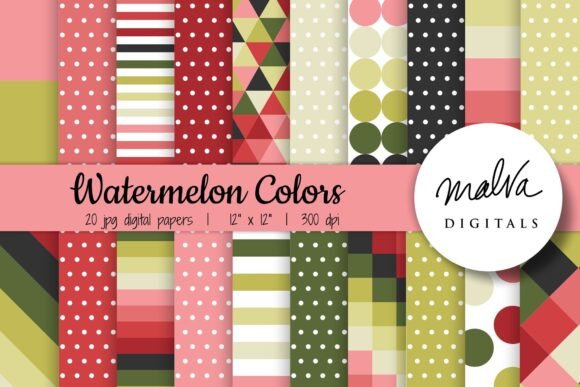
Watermelon Colors Geometric Patterns: A Practical Review of Digital Assets for Creative Projects
In the landscape of digital design, few elements are as universally recognizable and emotionally resonant as the color palette associated with summer. Specifically, the combination of vibrant reds, crisp whites, and deep greens evokes a sense of freshness and energy that is difficult to replicate with neutral tones. For creators, educators, and small business owners looking to inject this specific mood into their work, Watermelon Colors Geometric Patterns offer a structured yet playful solution. This collection of twenty distinct digital paper patterns leverages the iconic watermelon aesthetic through various geometric arrangements, providing a versatile toolkit for both print and digital media.
The value of such a resource lies not just in its visual appeal, but in its technical execution and broad applicability. When evaluating digital assets like these, it is crucial to look beyond the initial impression of the colors and examine the underlying structure, resolution, and format consistency. The following analysis breaks down what makes this specific set of geometric patterns a functional asset for professionals and hobbyists alike, examining its strengths, limitations, and ideal use cases.
Visual Composition and Design Philosophy
At first glance, the appeal of Watermelon Colors Geometric Patterns is rooted in its adherence to a classic tri-color scheme. However, the execution moves beyond simple solid blocks of color by incorporating a variety of geometric motifs. The collection includes polka dots, stripes, scattered dots, squares, circles, and triangles. Each pattern utilizes the watermelon color palette—typically a bright coral or true red for the "fruit," white for the rind, and a forest or lime green for the outer skin—to create cohesive yet varied textures.
This diversity in geometric shapes is significant. A designer working on a children’s classroom poster may require the boldness of large triangles or squares to capture attention, while someone designing elegant wedding invitations might prefer the subtlety of fine polka dots or thin stripes. By offering twenty variations, the collection ensures that users are not forced to compromise on style to maintain thematic consistency. The patterns are designed to be complementary; they can be mixed and matched within a single project without clashing, which is a common pitfall when using themed graphics.
The geometric nature of these designs also lends them a modern, clean aesthetic. Unlike hand-drawn or illustrative styles, which can sometimes feel dated or overly niche, geometric patterns tend to age well. They provide a backdrop that supports content rather than competing with it, making them suitable for professional presentations, educational worksheets, and corporate branding materials that wish to convey a light, approachable vibe.
Technical Specifications and Quality Standards
For any serious creative endeavor, the technical specifications of a digital asset are just as important as its visual design. In the case of Watermelon Colors Geometric Patterns, the provided files are high-resolution JPGs, specifically formatted at 300 dpi (dots per inch) with dimensions of 12” x 12”. These standards are critical for ensuring quality output across different mediums.
The 300 dpi resolution is the industry standard for high-quality printing. This means that whether you are printing a single sheet for a classroom label or a batch of stickers for a small business, the images will remain sharp and free from pixelation. Lower-resolution assets often result in blurry edges or muddy colors when scaled up, which can undermine the professionalism of the final product. With these files, users can confidently scale patterns for posters or banners without losing integrity.
The 12” x 12” square format is particularly advantageous for scrapbooking and cardmaking. This is a standard size in the crafting community, allowing for easy trimming and alignment with existing dies and templates. Furthermore, the JPG format ensures broad compatibility. While some designers prefer layered PSD files for maximum editability, JPGs are universally supported by almost all design software, from Adobe Photoshop and Illustrator to Microsoft PowerPoint and Canva. This accessibility reduces the barrier to entry for users who may not have advanced graphic design skills but still need high-quality backgrounds.
Practical Applications Across Industries
The versatility of Watermelon Colors Geometric Patterns allows them to serve multiple audiences. Below is an analysis of how these assets can be integrated into various workflows:
- Educators and Teachers: Summer-themed units are a staple of elementary education. These patterns are ideal for creating worksheet headers, bulletin board borders, and certificate templates. The geometric designs are engaging for students without being distracting, helping to maintain focus on the academic content. Additionally, the bright colors help organize materials visually, aiding in classroom management.
- Small Business Owners and Marketers: Entrepreneurs selling summer-related products, such as skincare, beverages, or seasonal apparel, can use these patterns for packaging labels, social media post backgrounds, and email newsletter headers. The consistent color palette reinforces brand identity during peak summer months. For example, a bakery could use the polka dot pattern for cupcake wrappers or treat bags, creating a cohesive unboxing experience.
- Event Planners and Hosts: Whether organizing a birthday party, a bridal shower, or a community fair, these digital papers can be used to design custom invitations, place cards, and decorative banners. The ability to print at home or via a local service allows for cost-effective customization that looks professionally designed.
- Digital Content Creators: Bloggers and YouTubers can utilize these patterns as thumbnails, section dividers, or overlay elements in video intros. The geometric shapes provide a dynamic visual interest that stands out in crowded feeds. Because the files are digital, they can be easily resized and manipulated to fit various aspect ratios required by different platforms.
- Hobbyists and Crafters: For those who enjoy scrapbooking, journaling, or sticker making, these patterns offer endless possibilities. The 12x12 size is perfect for layering with other ephemera. Users can create custom gift tags, holiday cards, or decorative albums that capture the essence of summer memories.
Considerations for Implementation
While the Watermelon Colors Geometric Patterns collection offers significant value, it is important to approach its use with a clear understanding of its limitations and best practices. First, because the assets are provided as JPGs, they do not include editable vector layers. This means that if a user needs to change the specific shade of red or alter the shape of a triangle within a pattern, they would need to use image editing software to mask or recolor sections. For users comfortable with basic photo editing tools, this is manageable, but it requires more effort than working with native vector files.
Secondly, the repetitive nature of seamless patterns requires careful tiling in design software. While most modern applications handle seamless repeats automatically, users should always preview their designs at full scale before committing to print. This step helps identify any awkward seams or misalignments that might occur when the pattern repeats across a larger surface area.
Additionally, color accuracy on screen versus print can vary depending on monitor calibration and printer settings. The vibrant reds and greens in these patterns may appear slightly different in physical form compared to their digital representation. It is advisable to perform a test print on the intended paper stock to ensure the colors meet expectations, especially for projects where precise color matching is critical, such as branded packaging.
Long-Term Value and Versatility
One of the strongest arguments for acquiring a set like Watermelon Colors Geometric Patterns is its longevity. Seasonal themes often have a short lifespan, but geometric patterns transcend trends. The watermelon color palette is not limited strictly to July and August; it can be adapted for spring celebrations, tropical-themed events, or even as a base for more abstract designs. The twenty variations provided ensure that the asset remains useful over time, preventing the monotony that comes from reusing a single background.
Furthermore, the digital nature of the product means there is no inventory cost or risk of damage. Once downloaded, the files can be stored indefinitely and accessed whenever a relevant project arises. This on-demand availability aligns well with the agile workflows of freelancers and small business owners who need resources quickly and efficiently.
Conclusion
The Watermelon Colors Geometric Patterns collection represents a thoughtful blend of aesthetic appeal and technical reliability. By combining a familiar, cheerful color scheme with diverse geometric structures, it provides a robust foundation for a wide array of creative projects. The high-resolution, standard-sized JPG files ensure ease of use across both print and digital platforms, making it a practical investment for educators, marketers, crafters, and designers.
While users should be mindful of the lack of vector editability and the need for color calibration, the benefits far outweigh these minor considerations. The collection’s versatility allows it to enhance everything from classroom materials to commercial branding, offering a cost-effective way to elevate visual communication. For anyone seeking to bring a touch of summer vibrancy and geometric precision to their work, this set of digital papers is a highly functional and valuable resource.