Daisy Tulip Daffodil Flowers Patterns: A Practical Review for Spring Design Projects
The transition from winter to spring often demands a shift in creative direction, particularly for professionals and small business owners looking to refresh their visual assets. The Daisy Tulip Daffodil Flowers Patterns collection addresses this seasonal need with a specific focus on high-resolution, print-ready graphics that blend classic floral motifs with modern versatility. This resource is not merely a decorative download; it represents a functional toolkit designed to streamline the production of seasonal merchandise, marketing materials, and personal projects.
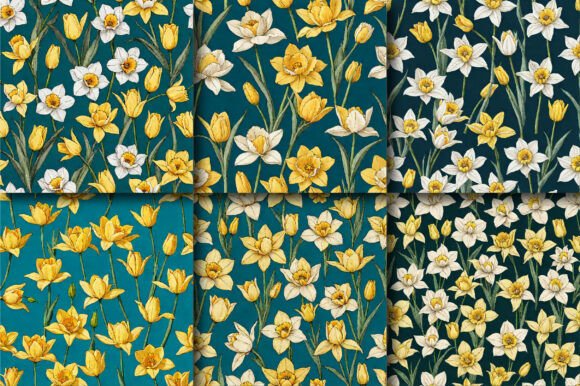
For creators who require reliable assets without compromising on quality or licensing flexibility, understanding the technical specifications and practical applications of this pattern set is essential. The collection features six distinct JPG files showcasing vibrant arrangements of daisies, tulips, and daffodils. These are curated to capture the essence of Easter and springtime celebrations while maintaining a level of sophistication suitable for commercial use.
Technical Specifications and File Integrity
In the realm of digital design, the difference between a usable asset and a frustrating one often comes down to resolution and file format. The Daisy Tulip Daffodil Flowers Patterns deliver 3600 x 3600 pixel dimensions per image, ensuring they meet the rigorous standards required for high-quality printing. This square aspect ratio provides maximum flexibility, allowing designers to crop, scale, or tile the patterns without losing clarity or introducing pixelation.
The inclusion of "print-ready" status indicates that these files possess sufficient color depth and sharpness for professional output. Whether you are producing large-format banners for a garden party or detailed stickers for a boutique shop, the high resolution ensures that the intricate details of the petals and stems remain crisp. Furthermore, the use of JPG format offers broad compatibility across various software platforms, from Adobe Creative Cloud suites to consumer-grade design tools like Canva or GIMP. While vector formats offer scalability, the convenience of high-resolution rasters often outweighs the benefits for quick-turnaround projects where editing time is a constraint.
Strategic Applications for Creators and Entrepreneurs
The primary value of this collection lies in its adaptability across multiple product categories. For entrepreneurs operating in the e-commerce space, the ability to quickly generate mockups and final designs for seasonal inventory is a significant competitive advantage. The patterns are explicitly noted as suitable for a wide array of gift items, including t-shirts, hoodies, mugs, pillows, and tote bags.
Consider a scenario where a small business owner needs to launch an Easter-themed line of stationery within a week. Using pre-designed patterns like Daisy Tulip Daffodil Flowers Patterns eliminates the need to commission custom illustrations or spend days creating seamless repeats from scratch. The designs can be directly applied to invitation templates, greeting cards, and printable decorations, significantly reducing the time-to-market.
Beyond physical goods, the utility extends to digital marketing. Marketers can utilize these images for social media campaigns, email headers, and website banners. The cheerful and lively aesthetic aligns perfectly with brand messaging during the spring season, helping to boost engagement rates by offering visually refreshing content that resonates with current trends. Additionally, the patterns work well for decal and phone case designs, tapping into the lucrative market of personalized accessories.
Evaluating Quality, Consistency, and Usability
When assessing the effectiveness of a design asset, consistency is key. A collection that feels disjointed can undermine the professionalism of a final product. The Daisy Tulip Daffodil Flowers Patterns maintain a cohesive visual language across all six files. By focusing on three specific blooms—daisies, tulips, and daffodils—the collection avoids the clutter that often plagues generic floral bundles. This focused approach allows for a unified look when mixing and matching elements within a single project.
The ease of editing is another critical factor for busy professionals. Because the files are standard JPGs, they can be manipulated in almost any image editor. Users can adjust brightness, contrast, saturation, or overlay text without encountering the complexity of layer management found in PSD files. This simplicity makes the resource accessible to freelancers and hobbyists who may not have extensive experience with advanced graphic design software, yet still require polished results.
However, it is important to note the limitations inherent in raster-based patterns. Unlike vector graphics, these images cannot be scaled infinitely without potential loss of quality if resized beyond their original dimensions. For most applications, such as apparel printing and standard paper goods, the 3600 x 3600 px size is more than adequate. However, for massive outdoor signage requiring extreme scaling, users might need to source vector alternatives. Despite this, the reliability and presentation of these files make them a strong choice for the vast majority of seasonal design tasks.
Ideal Use Cases and Target Audience
This resource is particularly beneficial for educators creating classroom decorations or newsletters, bloggers developing seasonal content, and publishers working on limited-run books or magazines. The "cheerful stationery" aspect mentioned in the description suggests a strong fit for wedding planners and event coordinators organizing spring gatherings. The classic nature of the blooms ensures the designs remain timeless rather than trendy, providing long-term value for projects that may extend beyond the immediate holiday period.
Small business owners will find the most immediate return on investment here. The ability to produce diverse products—from mobile popsockets to home décor items—using a single download reduces overhead costs associated with hiring illustrators. It empowers creators to test new product lines with minimal risk. For instance, a maker could create a batch of tote bags and a corresponding set of invitations using the same pattern family, ensuring brand consistency across their entire spring campaign.
Integrating the Collection into Your Workflow
To maximize the utility of the Daisy Tulip Daffodil Flowers Patterns, consider integrating them early in your planning process. Rather than waiting until the last minute to finalize designs, having these assets ready allows for better brainstorming and layout experimentation. You can create variations by adjusting the background colors or combining different pattern styles to suit specific brand guidelines.
For those focusing on eco-friendly or sustainable crafting, these digital patterns support a reduction in waste. Instead of purchasing physical scrapbooking paper or pre-printed fabrics that may not match a specific vision, creators can print exactly what they need, when they need it. This on-demand approach aligns with modern efficiency goals and supports a more streamlined workflow.
In conclusion, the Daisy Tulip Daffodil Flowers Patterns collection serves as a robust foundation for spring-themed creative endeavors. Its combination of high resolution, versatile application, and clear thematic focus makes it a valuable tool for anyone looking to enhance their visual output during the spring season. Whether you are a seasoned designer seeking to speed up production or a hobbyist looking to add a touch of elegance to a handmade gift, this resource offers a practical and effective solution.
By leveraging these designs, professionals can ensure their projects stand out with fresh, joyful imagery that captures the spirit of the season. The balance of artistic appeal and technical reliability confirms its place as a worthy addition to any digital asset library focused on seasonal creativity.