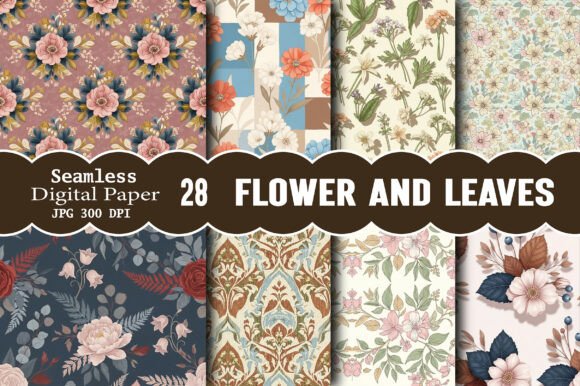
Flower and Leaves Patterns: Elevating Your Creative Projects Beyond the Basics
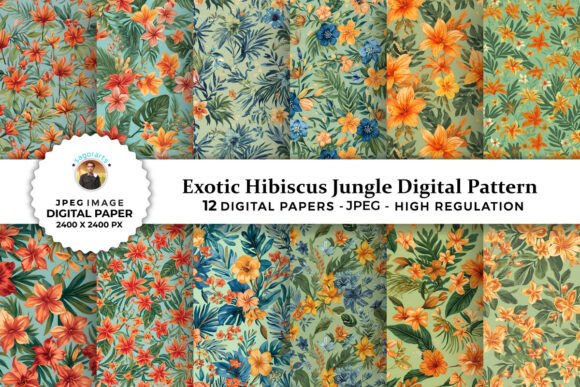
When you first encounter a collection of Flower and Leaves Patterns, it is easy to see them merely as decorative elements. However, for designers, crafters, and small business owners, these seamless textures represent a versatile toolkit capable of transforming mundane items into premium products. Whether you are looking to design charming tote bags, craft custom notebook covers, or create bespoke pillows, the right pattern can elevate your brand’s aesthetic instantly. The key lies not just in selecting a pretty image, but in understanding how to apply these designs effectively across various mediums.
This package offers high-resolution JPGs specifically crafted for sublimation, scrapbooking, sticker making, and DIY craft ventures. But simply downloading a file is only the first step. To truly harness the potential of these enthralling seamless flower and leaf patterns, one must navigate common pitfalls related to resolution, application, and commercial usage. By avoiding these typical errors, you ensure that your final product looks professional, cohesive, and worth the investment.
Understanding the Versatility of Seamless Textures
The term "seamless" is often used loosely in digital asset markets, but its practical implication is significant. A true seamless pattern repeats without visible breaks, allowing it to wrap around objects like tumblers, mugs, or fabric rolls seamlessly. This makes Flower and Leaves Patterns ideal for producing striking mini junk journals or cutting-edge scrapbook decoupage. When applied correctly, the continuity of the design creates an immersive experience for the viewer, drawing their eye across the entire surface rather than stopping at awkward edges.
Beyond physical crafts, these patterns extend into the digital realm. You can breathe new life into your social media backgrounds and website graphics by using these soft watercolor textures as backdrops. They add depth and personality without overwhelming text or call-to-action buttons. For educators and bloggers, they serve as excellent visual anchors for printable worksheets or blog headers, fostering engagement through aesthetically pleasing layouts.
Common Mistakes in Pattern Application
Even with high-quality assets, results can suffer if the underlying principles of design are ignored. One frequent mistake is ignoring the scale of the pattern relative to the product size. A dense floral cluster that looks balanced on a large tote bag may appear cluttered and muddy when reduced to the size of a phone case or a playing card. Conversely, a sparse leaf motif might look empty on a large pillow cover unless repeated strategically. Always preview your pattern at actual print size before committing to production.
Another overlooked detail is the contrast between the pattern and the base material. Soft watercolor textures rely on subtle color transitions. If you sublimate these designs onto dark-colored substrates without a proper white underbase, the colors will appear dull and washed out. This is particularly relevant when creating crowd-pleasing tumblers or awe-inspiring mugs. Ensure your printing process accounts for the substrate color to maintain the vibrancy intended by the original artist.
Furthermore, many creators fail to consider the "bleed area." When designing packaging, t-shirts, or 3D art projects, patterns need to extend beyond the cut lines to prevent white edges during manufacturing. Failing to include adequate bleed can result in unsightly gaps, ruining the professional appearance of your merchandise. Always check the technical specifications provided with your digital paper pack set to ensure you are working within the correct parameters.
Optimizing for Specific Use Cases
Different projects demand different approaches to the same pattern. For instance, when creating wedding invites, baby showers, or birthday decorations, the mood should be delicate and refined. Here, the Flower and Leaves Patterns work best when used as borders or corner accents rather than full-page backgrounds. This allows space for essential information like dates and venues to remain legible. Using the pattern as a full backdrop in such cases can compete with the typography, reducing readability and overall elegance.
In contrast, for handmade stationery or bookmarks, you have more freedom to let the pattern take center stage. Since these items are smaller and often handled individually, a continuous wrap-around effect can be highly appealing. Similarly, when curating a pack of playing cards, consider alternating between patterned backs and solid colors or simpler motifs for the faces to maintain visual balance. The versatility of these soft watercolor textures makes them suitable for both bold statements and subtle enhancements.
For entrepreneurs selling on platforms like Etsy or Shopify, consistency is key. Use the same Flower and Leaves Patterns across your product line—from labels to packaging—to build a recognizable brand identity. Level-up your candle and soap labels by integrating these designs with clean, modern typography. This combination of organic texture and structured text signals quality and attention to detail, which can significantly impact customer trust and sales.
Evaluating Quality Before You Download
Not all digital patterns are created equal. When evaluating Flower and Leaves Patterns, always verify the resolution. High-resolution files are crucial for sublimation and large-format printing. Low-resolution images will pixelate when enlarged, leading to frustrated customers and wasted materials. Look for files that are explicitly labeled as suitable for print, typically 300 DPI (dots per inch) or higher.
Additionally, check the file format. While the package includes high-resolution JPGs, which are widely compatible, some advanced users may prefer PNGs for transparency support or vector formats for infinite scalability. However, for most DIY craft ventures, standard JPGs are sufficient and easier to manage. Ensure that the dimensions can be resized to adapt to your needs without significant loss of quality. Most modern editing software handles scaling well, but starting with a larger file provides more flexibility.
Finally, review the licensing terms carefully. Some patterns are restricted to personal use only, while others allow commercial application. Misunderstanding these terms can lead to legal issues, especially if you plan to sell products featuring these designs. Always confirm that you have the right to use the Flower and Leaves Patterns for your intended purpose, whether it’s for a small business inventory or a one-off gift.
Maximizing Creative Potential
To get the most out of this digital paper pack set, experiment with layering and opacity. Combining the floral patterns with solid color blocks or other geometric shapes can create unique compositions that stand out. For graphical designs, try using the pattern as a clipping mask over photos to add texture and interest. This technique is particularly effective for posters and book covers, where you want to capture attention quickly.
Don’t limit yourself to traditional applications. Consider using these patterns for 3D art projects, where the texture can simulate natural surfaces like wallpaper or fabric. In the realm of virtual events or online courses, these designs can serve as engaging slide backgrounds, keeping participants visually stimulated. The possibilities are indeed endless, limited only by your imagination and willingness to explore.
By approaching Flower and Leaves Patterns with a strategic mindset, you avoid common pitfalls and unlock their full potential. Whether you are a beginner exploring your first craft project or a seasoned pro refining your product line, these versatile textures offer a reliable foundation for creativity. Pay attention to scale, contrast, bleed, and licensing, and you will consistently produce results that are not only beautiful but also professionally executed. Embrace the charm of nature-inspired designs, and watch your creative endeavors flourish.